
Apple Cider Pound Cake brings cozy orchard flavor to a tender, golden loaf that fits almost any fall occasion. Butter, sugar, eggs, and fresh apple cider create a dense yet soft crumb, while a smooth cider glaze adds a bright, sweet finish. Because the recipe uses familiar baking staples, you can prepare it without complicated techniques or specialty equipment. Serve a thick slice after dinner, add it to a weekend brunch, or enjoy it beside hot coffee. Each bite balances buttery richness with gentle apple flavor, so this simple loaf feels both comforting and festive.
Story
I love recipes that make the kitchen smell warm before the first bite reaches the table, and Apple Cider Pound Cake does exactly that. As the loaf bakes, butter, sugar, and cider create an aroma that feels perfect for cool mornings and relaxed fall gatherings. Unlike an apple cake filled with chopped fruit, this recipe uses cider to spread apple flavor throughout every slice. Therefore, the crumb stays smooth, tender, and easy to cut. The simple glaze also repeats the cider flavor without covering the cake under heavy frosting.
Apple Cider Pound Cake works beautifully when you want a homemade treat without spending the entire afternoon in the kitchen. The batter comes together quickly, and the loaf pan gives the cake a classic shape that looks inviting on a serving board. Although the recipe feels special enough for company, it also suits ordinary weekends. In fact, I often think of it as a rich buttery cake that can move easily from brunch to dessert.
Because this cake contains no chopped apples, nuts, or layered filling, the texture remains pleasantly dense and even. Meanwhile, the apple cider adds light fruity notes that soften the sweetness. The glaze brings everything together with powdered sugar, cider, and a small pinch of cinnamon. Consequently, Apple Cider Pound Cake becomes a dependable fall dessert for potlucks, family dinners, holiday tables, or quiet evenings at home.
Ingredients
This recipe uses straightforward ingredients, but each one plays an important role. Softened butter creates a creamy base, eggs give the loaf structure, and apple cider adds seasonal flavor. For the best texture, bring the butter and eggs close to room temperature before mixing. Also, measure the flour carefully so the cake stays tender rather than dry.
For the Pound Cake
- 3/4 cup unsalted butter, softened
- 1 1/2 cups granulated sugar
- 3 large eggs, at room temperature
- 1 1/2 cups all-purpose flour
- 1/4 teaspoon baking powder
- 1/4 teaspoon salt
- 1/2 cup apple cider
- Nonstick cooking spray
For the Apple Cider Glaze
- 1 cup powdered sugar, sifted
- 1 to 2 tablespoons apple cider
- 1 small pinch ground cinnamon
Step-by-Step Instructions
Follow the mixing order closely because pound cake depends on a smooth, well-aerated butter mixture. First, prepare the loaf pan and ingredients. Then mix the batter gradually, bake until the center sets, and cool the loaf fully before adding the glaze. Although the method stays simple, patient mixing and cooling will give you cleaner slices and a better crumb.
Preparing the Ingredients
Preheat the oven to 350°F. Line a 9-by-5-inch loaf pan with parchment paper, leaving extra parchment above the two long sides so you can lift out the baked cake. Lightly coat the parchment and exposed ends of the pan with nonstick cooking spray. Next, place the softened butter, sugar, and eggs near your mixer. In a separate bowl, whisk the flour, baking powder, and salt until evenly combined. Measure the apple cider, sift the powdered sugar for the glaze, and keep every ingredient within reach before you begin mixing.
Cooking Instructions
Add the softened butter and granulated sugar to the bowl of a stand mixer. Beat them on medium speed until the mixture looks pale, light, and fluffy. This step adds air, so scrape the bowl once or twice and continue mixing until no heavy streaks remain. Next, add the eggs one at a time. Beat well after each egg so it blends fully into the butter mixture before you add the next one.
Reduce the mixer to low speed. Add about one-third of the flour mixture, followed by half of the apple cider. Mix only until the ingredients begin to combine. Then add another third of the flour mixture and the remaining cider. Finish with the last portion of flour. Stop mixing as soon as the batter looks smooth and even because excessive mixing can make the loaf firm.
Transfer the batter to the prepared pan and spread the top with a spatula. Gently tap the pan against the counter once or twice to bring large air pockets to the surface. Bake for 40 to 50 minutes. Start checking near the 40-minute mark because oven temperatures vary. Insert a thin knife or wooden tester into the center. The cake is ready when the tester comes out clean or carries only a few moist crumbs.
Place the pan on a cooling rack for 10 to 15 minutes. Run a thin knife around any cake edges that touch the pan. Then lift the loaf out by holding the parchment flaps. Remove the parchment carefully and place the cake directly on the rack. Let it cool completely.
Meanwhile, whisk the sifted powdered sugar with 1 tablespoon apple cider and a pinch of cinnamon. Add more cider a few drops at a time until the glaze pours slowly from the whisk. Drizzle it over the cooled loaf. Finally, let the glaze set before slicing and serving your sweet autumn breakfast, dessert, or afternoon treat.
Tips for Perfect Results
Small details make a noticeable difference in a butter-based loaf. Therefore, use softened butter rather than melted butter, add each egg separately, and stop mixing once the flour disappears. Additionally, allow the cake to cool before glazing it. A warm loaf will melt the glaze, while a cool loaf will hold a smooth white drizzle across the top.
Common Mistakes to Avoid
Do not use butter that feels oily or nearly melted. Overly warm butter cannot hold enough air during creaming, so the loaf may turn heavy. Likewise, avoid scooping flour directly from the bag because packed flour can dry the cake. Spoon flour into the measuring cup and level it gently instead. Furthermore, do not add all the eggs at once, since the batter may separate. Finally, resist opening the oven repeatedly. Sudden temperature changes can cause the center to sink before the structure sets.
Pro Tips for Better Flavor
Choose fresh, flavorful apple cider rather than plain apple juice because cider usually offers a deeper orchard taste. For a stronger apple note, simmer extra cider in a small saucepan until it reduces slightly, cool it, and use the reduced cider in the glaze. You can also add a tiny pinch of nutmeg beside the cinnamon. However, keep the spices light so they support the cider rather than hide it. For an especially tender slice, wrap the cooled, unglazed loaf overnight and glaze it the next day. The resting time allows the moisture and flavor to settle evenly throughout the crumb.
Serving and Storage
Apple Cider Pound Cake tastes wonderful at room temperature, which makes it practical for parties, brunches, and packed snacks. The glaze sets neatly, so the slices travel well when placed in a covered container. Because the loaf tastes rich, cut moderate slices and pair them with simple drinks or lightly sweet toppings.
How to Serve
Serve the cake with hot coffee, black tea, warm cider, or cold milk. For dessert, place a slice on a plate with lightly whipped cream or a small scoop of vanilla ice cream. Fresh apple slices also add a crisp contrast to the soft cake. During brunch, arrange slices beside eggs, fruit, and savory breakfast dishes. You can also cut the loaf into smaller pieces for a party tray, where it becomes an easy festive snack that guests can pick up without utensils.
How to Store Leftovers
Store the cake in an airtight container at room temperature for up to three days. Place parchment between stacked slices so the glaze does not stick. For longer storage, refrigerate the loaf for up to five days, although chilling can make the butter-based crumb feel firmer. Let refrigerated slices rest at room temperature before serving. You can also freeze individual unglazed slices for up to two months. Wrap each piece tightly, place the slices in a freezer-safe container, and thaw them on the counter. Add fresh glaze after thawing for the best appearance.
Conclusion
Apple Cider Pound Cake turns a short list of pantry ingredients into a warm, memorable seasonal bake. The buttery crumb, gentle cider flavor, and sweet cinnamon glaze work together without making the recipe complicated. Because the loaf suits breakfast, brunch, snacks, and dessert, you can prepare it for nearly any autumn occasion. Follow the mixing steps carefully, let the cake cool fully, and drizzle the glaze only when the surface feels cool. Then slice it thickly, pour your favorite warm drink, and enjoy a homemade cake that captures the welcoming flavor of apple cider.
Discover more delicious recipes by following me on Facebook and Pinterest.
Frequently Asked Questions
These common questions cover ingredient choices, doneness, and preparation timing. Since every kitchen and oven behaves differently, use the visual and texture cues in the answers along with the suggested baking time.
Can I Use Apple Juice Instead of Apple Cider?
You can replace apple cider with apple juice in the same amount, but the finished cake may taste milder. Apple cider often carries a fuller, slightly tangy apple character, while filtered juice tastes lighter and sweeter. If you use juice, add a small pinch of cinnamon to the batter or reduce some juice for the glaze to deepen the flavor. Avoid hard cider unless you specifically want its sharper taste and understand that it will change the recipe.
How Do I Know When the Pound Cake Is Done?
Check the center with a thin knife, skewer, or wooden tester after about 40 minutes. The tester should come out clean or with a few moist crumbs, but it should not carry wet batter. Also, look for a golden top and edges that begin to pull slightly from the pan. If the top browns too quickly while the center remains wet, loosely cover the loaf with foil and continue baking. Let the cake rest in the pan before lifting it out because the hot crumb needs time to firm.
Can I Make Apple Cider Pound Cake Ahead of Time?
Yes, and the flavor often tastes even better after the loaf rests. Bake the cake one day before serving, cool it completely, and wrap it tightly without the glaze. Keep it at room temperature overnight. Before serving, prepare the cider glaze and drizzle it over the loaf. Allow the topping to set, then slice the cake with a clean serrated knife. This method saves time before brunches, holiday meals, or fall gatherings while keeping the glaze fresh and attractive.
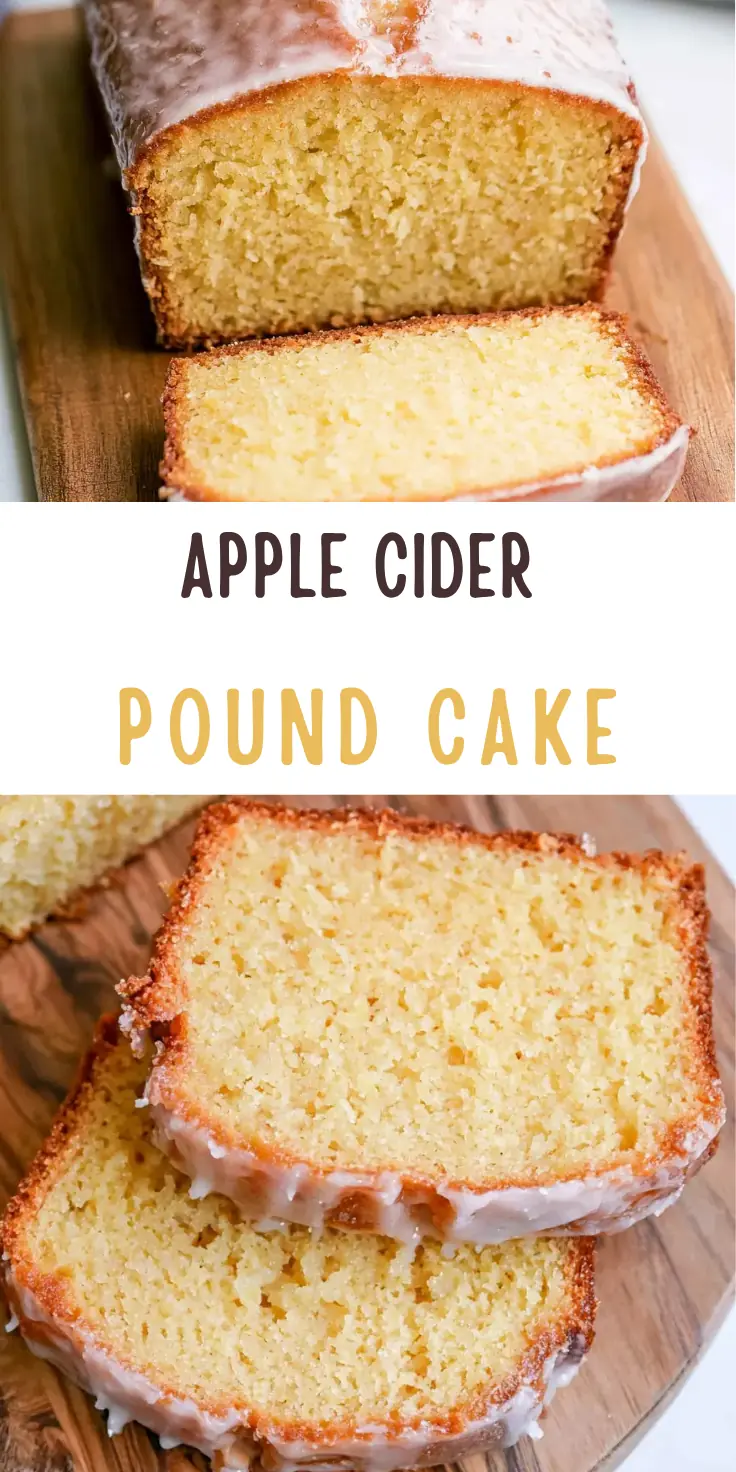

Apple Cider Pound Cake
- Total Time: 1 hour
- Yield: 12 slices 1x
- Diet: Vegetarian
Description
Apple Cider Pound Cake features a rich, buttery crumb infused with fresh cider and finished with a smooth apple cider cinnamon glaze. Serve this easy American loaf for breakfast, brunch, dessert, or a seasonal snack.
Ingredients
- 3/4 cup unsalted butter, softened
- 1 1/2 cups granulated sugar
- 3 large eggs, at room temperature
- 1 1/2 cups all-purpose flour
- 1/4 teaspoon baking powder
- 1/4 teaspoon salt
- 1/2 cup apple cider
- Nonstick cooking spray
- 1 cup powdered sugar, sifted
- 1 to 2 tablespoons apple cider
- 1 small pinch ground cinnamon
Instructions
- Preheat the oven to 350°F.
- Line a 9-by-5-inch loaf pan with parchment paper, leaving excess parchment above the long sides, and coat it lightly with nonstick cooking spray.
- Whisk the flour, baking powder, and salt together in a medium bowl.
- Beat the softened butter and granulated sugar in a stand mixer until pale, light, and fluffy.
- Add the eggs one at a time, beating well after each addition.
- Add the dry mixture in three portions, alternating with the apple cider, and mix only until evenly combined.
- Transfer the batter to the prepared loaf pan and smooth the top.
- Tap the pan gently against the counter once or twice to release large air bubbles.
- Bake for 40 to 50 minutes, or until a knife or wooden tester inserted into the center comes out clean or with a few moist crumbs.
- Cool the cake in the pan for 10 to 15 minutes.
- Run a knife around the exposed edges, lift the loaf out with the parchment, and transfer it to a wire rack to cool completely.
- Whisk the powdered sugar with 1 tablespoon apple cider and the cinnamon until smooth.
- Add additional cider a few drops at a time until the glaze reaches a slow-pouring consistency.
- Drizzle the glaze over the completely cooled cake.
- Let the glaze set before slicing and serving.
Notes
- Use softened butter rather than melted butter for the best texture.
- Measure the flour by spooning it into the measuring cup and leveling the top.
- Add each egg separately so the batter stays smooth.
- Do not overmix the batter after adding the flour.
- Use fresh apple cider for a fuller apple flavor.
- Cool the cake completely before adding the glaze.
- Store the cake in an airtight container at room temperature for up to 3 days.
- Prep Time: 10 minutes
- Cook Time: 50 minutes
- Category: Breakfast, Brunch, Dessert, Snack
- Method: Baking
- Cuisine: American
Nutrition
- Serving Size: 1 slice
- Calories: 317
- Sugar: 36
- Sodium: 169
- Fat: 13
- Saturated Fat: 8
- Unsaturated Fat: 4
- Trans Fat: 1
- Carbohydrates: 48
- Fiber: 1
- Protein: 3
- Cholesterol: 77