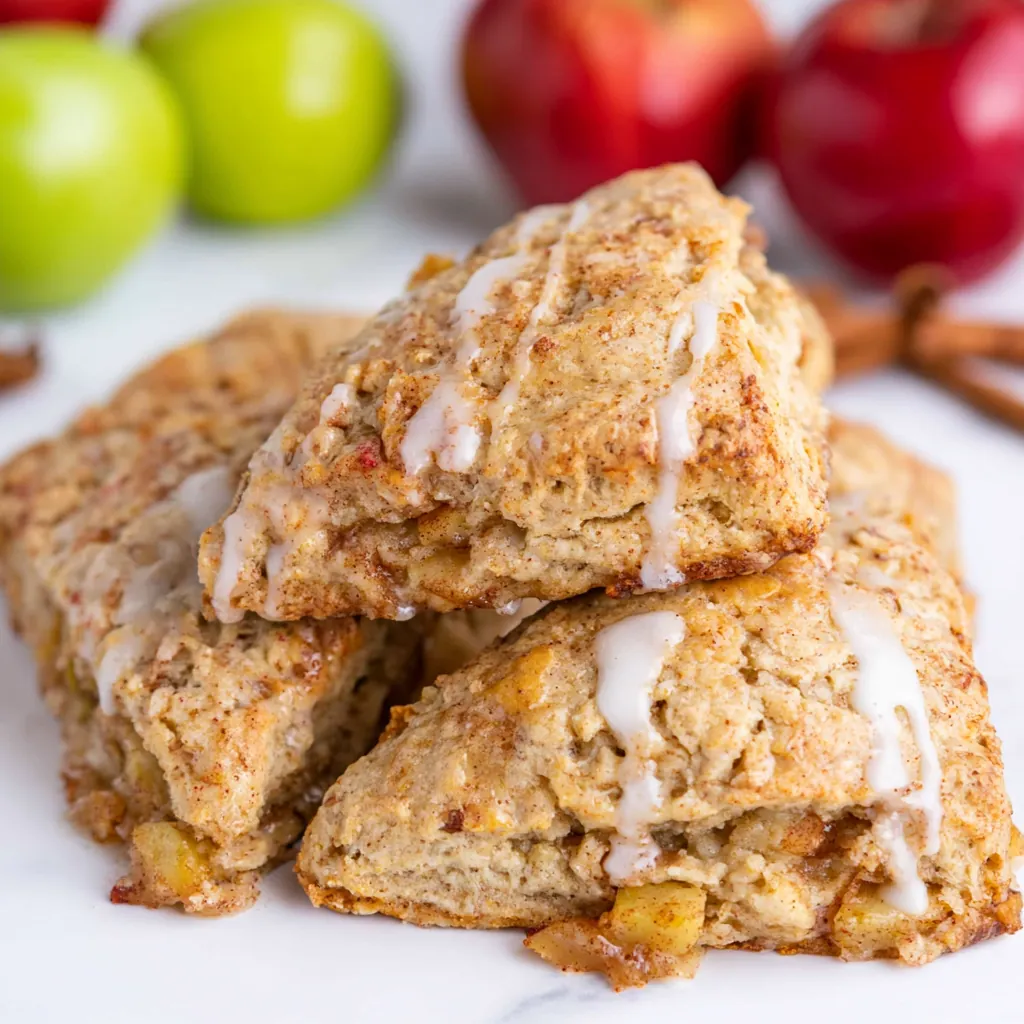
Apple Cinnamon Scones bring fresh apple flavor, warm spice, and buttery layers to the breakfast table in only 40 minutes. Each golden wedge has crisp edges, a tender center, and small pieces of apple in every bite. A simple powdered sugar glaze adds just enough sweetness without hiding the cinnamon. Because the dough uses familiar pantry ingredients, this recipe works well for relaxed weekend baking, holiday brunches, or an afternoon coffee break. Keep the butter cold, mix the dough gently, and cut the apple into small pieces. Those simple habits create tall, flaky scones that taste like autumn from the first bite.
Story
I often reach for this recipe when the weather turns cool and I want something homemade without spending all morning in the kitchen. Apple Cinnamon Scones offer the comfort of apple pie, yet they come together much faster and require no pastry crust. The scent of brown sugar and cinnamon fills the kitchen while the wedges bake, which makes them especially inviting for fall breakfasts. These Apple Cinnamon Scones rely on cold butter, light handling, and fresh fruit for their texture. They also make a lovely homemade breakfast treat for guests because you can shape the dough, chill the wedges briefly, and bake them just before serving. Whether you drizzle them with glaze or finish them with coarse sugar, Apple Cinnamon Scones deliver a warm, bakery-style result with little fuss.
Ingredients
- 2 1/2 cups all-purpose flour
- 1/2 cup packed dark brown sugar
- 1 tablespoon baking powder
- 1 teaspoon ground cinnamon
- 1/2 teaspoon salt
- 1/2 cup cold salted butter, cut into small cubes
- 1 cup milk
- 1 medium apple, peeled and diced small, about 1 cup
- 1 large egg, beaten, for the egg wash
- 1 teaspoon milk, for the egg wash
- 1/2 cup powdered sugar, for the glaze
- 1 tablespoon milk, for the glaze
Step-by-Step Instructions
Work in a steady sequence, keep the dough rough, and handle it gently so this apple cinnamon pastry bakes with tender layers.
Preparing the Ingredients
Peel the apple, remove the core, and cut the fruit into small, even cubes. Smaller pieces spread through the dough more evenly and soften during the short baking time. Next, cut the cold salted butter into cubes and return it to the refrigerator while you measure the dry ingredients. In a large bowl, whisk together the flour, dark brown sugar, baking powder, cinnamon, and salt. Break up any firm pieces of brown sugar with your fingers or the whisk. Beat the egg with 1 teaspoon milk in a small bowl for the egg wash. Finally, measure the powdered sugar and remaining tablespoon of milk for the glaze, but wait to combine them until the scones have cooled.
Cooking Instructions
Add the cold butter cubes to the flour mixture. Cut them into the dry ingredients with a pastry blender or two knives until the mixture looks like coarse crumbs with a few pea-size butter pieces. Make a well in the center, pour in 1 cup milk, and stir gently until a shaggy dough forms. Fold in the diced apple without pressing or kneading the dough heavily. Turn the dough onto a lightly floured surface, knead it two or three times, and press it into an 8-inch circle. Cut the circle into eight wedges with a sharp knife or bench scraper. Place the wedges at least 1 inch apart on the prepared baking sheet. For extra lift, chill them for 10 minutes. Brush the tops with egg wash, then bake for about 20 minutes, or until the tops look golden and the centers feel set. Transfer the scones to a wire rack. Once fully cool, whisk the powdered sugar with 1 tablespoon milk and drizzle the glaze over each wedge.
Tips for Perfect Results
Cold butter, gentle mixing, hand shaping, and enough space between wedges produce the lightest texture and crispest golden edges.
Common Mistakes to Avoid
Do not use warm or softened butter because it blends into the flour and produces dense scones. Likewise, do not overmix after adding the milk. Too much stirring develops gluten, which makes the crumb firm rather than flaky. Avoid large apple chunks because they can release excess moisture and leave gummy spots in the centers. Cut the wedges with a straight downward motion instead of dragging a dull knife through the dough. A clean cut helps the layers rise. Also, watch the milk measurement carefully. The dough should feel soft and slightly tacky, not wet or pourable. Most importantly, wait until the scones cool before glazing them, or the glaze will melt into a thin, sticky coating.
Pro Tips for Better Flavor
Choose an apple with enough structure to hold its shape in the oven. Granny Smith gives the scones a bright, tart contrast, while Honeycrisp or Pink Lady adds a sweeter flavor. You can also replace the plain glaze with a maple glaze by stirring a little pure maple syrup into the powdered sugar and reducing the milk. Toasted pecans or walnuts also pair well with the apple, although you should keep additions modest so the dough remains light. These small changes turn a simple batch into memorable fall baking scones without changing the core method.
Serving and Storage
Serve the scones slightly warm for the best crumb, then store every cooled leftover carefully to protect its texture and glaze.
How to Serve
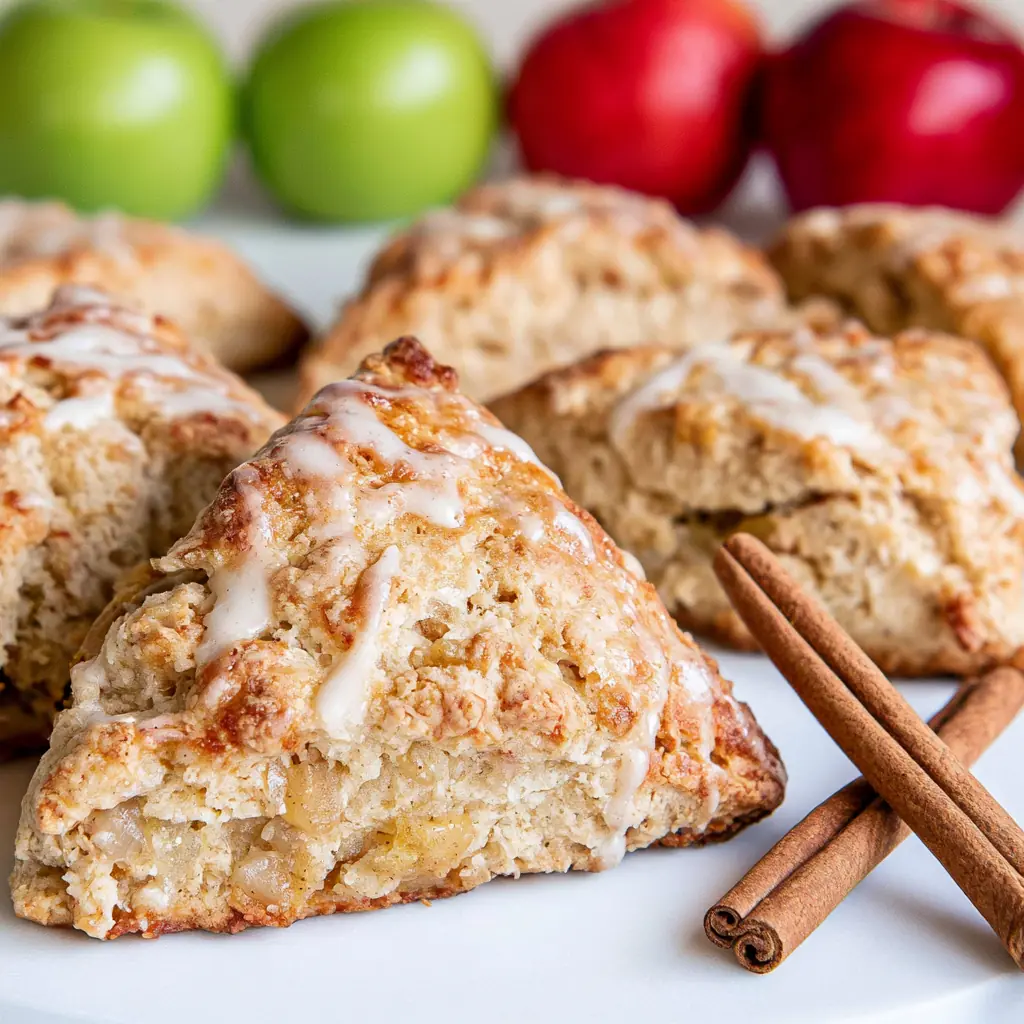
Place the scones on a platter after the glaze sets, then serve them whole or split them horizontally. For a holiday brunch, arrange the wedges with sliced apples, cinnamon sticks, and small bowls of apple butter. You can also make the recipe feel more dessert-like by adding a small scoop of vanilla ice cream to a gently warmed scone. However you present them, their warm spice and tender crumb make them a dependable sweet autumn recipe for family breakfasts, casual gatherings, bake sales, and seasonal coffee breaks.
How to Store Leftovers
Store completely cooled scones in an airtight container at room temperature for up to three days. Place parchment paper between layers so the glaze does not stick. For longer storage, wrap each unglazed scone in plastic wrap, place the wrapped pieces in a freezer-safe bag, and freeze them for up to three months. Thaw at room temperature, warm briefly in the oven, and add fresh glaze after thawing. You may also freeze shaped, unbaked wedges, then bake them from cold with a few extra minutes.
Conclusion
Apple Cinnamon Scones combine everyday ingredients with a straightforward method that rewards careful handling. Cold butter creates flaky layers, dark brown sugar adds rich sweetness, and fresh apple keeps the centers tender. Because the recipe takes only 40 minutes from start to finish, you can make it for breakfast without planning an entire day around it. Try the glaze for a bakery-style finish, or use coarse sugar for a crisp topping. Either way, serve the scones with a warm drink and enjoy them while the edges remain golden and the centers stay soft.
Discover more delicious recipes by following me on Facebook and Pinterest.
Frequently Asked Questions
These answers cover apple choice, make-ahead preparation, and the simple habits that help scones bake light rather than dense.
What Kind of Apple Works Best for Apple Cinnamon Scones?
Firm apples work best because they soften without disappearing into the dough. Granny Smith offers a tart flavor that balances the brown sugar and glaze. Honeycrisp, Pink Lady, Braeburn, and Fuji provide a sweeter result while still holding their shape. Avoid very soft or mealy apples, since they can turn mushy and release too much juice. No matter which variety you choose, peel it and dice it into small pieces. About 1/4-inch cubes work well because they distribute evenly and cook through during the 20-minute baking time.
Can I Make the Scone Dough Ahead of Time?
Yes. Shape and cut the dough, place the wedges on the prepared baking sheet, cover them tightly, and refrigerate them for several hours or overnight. Brush them with egg wash just before baking. Cold dough may need one or two additional minutes in the oven. You can also freeze the unbaked wedges on a tray until solid, then move them to a freezer bag. Bake them directly from frozen at 400°F, adding a few minutes as needed. Keep the glaze separate and add it only after the baked scones cool completely.
Why Did My Scones Turn Out Dense Instead of Flaky?
Dense scones usually result from warm butter, overmixed dough, or too much flour. Measure the flour carefully, preferably by spooning it into the measuring cup and leveling the top. Keep the butter cold and leave some small pieces visible in the mixture. Once you add the milk, stir gently and stop when the dough looks shaggy. Knead only two or three times, then press the dough into shape with your hands. Chilling the wedges for 10 minutes before baking can also help the butter stay firm and support a taller, flakier rise.

Apple Cinnamon Scones
- Total Time: 40 minutes
- Yield: 8 scones 1x
- Diet: Vegetarian
Description
Light and flaky Apple Cinnamon Scones filled with fresh apple pieces, dark brown sugar, and warm cinnamon. Each golden scone has crisp edges, a tender center, and a simple powdered sugar glaze.
Ingredients
- 2 1/2 cups all-purpose flour
- 1/2 cup packed dark brown sugar
- 1 tablespoon baking powder
- 1 teaspoon ground cinnamon
- 1/2 teaspoon salt
- 1/2 cup cold salted butter, cut into small cubes
- 1 cup milk
- 1 medium apple, peeled and diced small, about 1 cup
- 1 large egg, beaten
- 1 teaspoon milk, for the egg wash
- 1/2 cup powdered sugar
- 1 tablespoon milk, for the glaze
Instructions
- Preheat the oven to 400°F. Line a baking sheet with parchment paper or coat it lightly with nonstick spray.
- Peel, core, and finely dice the apple. Cut the cold salted butter into small cubes.
- Whisk the flour, dark brown sugar, baking powder, cinnamon, and salt together in a large bowl.
- Add the cold butter. Cut it into the flour mixture with a pastry blender or two knives until coarse crumbs form and a few pea-size butter pieces remain.
- Make a well in the center and pour in 1 cup milk. Stir gently until a rough, shaggy dough forms.
- Fold in the diced apple without overmixing the dough.
- Turn the dough onto a lightly floured surface. Knead it two or three times, then press it into an 8-inch circle.
- Cut the dough into eight wedges with a sharp knife or bench scraper.
- Place the wedges at least 1 inch apart on the prepared baking sheet. Chill for 10 minutes for extra lift, if desired.
- Beat the egg with 1 teaspoon milk. Brush the egg wash over the tops of the scones.
- Bake on the center rack for about 20 minutes, until the scones look golden brown and the centers feel set.
- Transfer the scones to a wire rack and cool completely.
- Whisk the powdered sugar with 1 tablespoon milk until smooth. Drizzle the glaze over the cooled scones.
Notes
- Keep the butter cold until the scones enter the oven.
- Handle and knead the dough as little as possible.
- Dice the apple into small pieces so it cooks evenly.
- A rough, shaggy dough produces a lighter texture.
- Press the dough into a circle with your hands instead of rolling it.
- Chill the shaped wedges for 10 minutes before baking for extra lift.
- Use a sharp knife or bench scraper to cut clean wedges.
- Let the scones cool completely before adding the glaze.
- For a crunchy topping, skip the glaze and sprinkle coarse sugar over the egg wash.
- Store cooled scones in an airtight container at room temperature for up to three days.
- Freeze cooled, unglazed scones in a freezer-safe container for up to three months.
- Thaw frozen scones before warming and glazing.
- Prep Time: 20 minutes
- Cook Time: 20 minutes
- Category: Breakfast
- Method: Baking
- Cuisine: American
Nutrition
- Serving Size: 1 scone
- Calories: 366
- Sugar: 23
- Sodium: 520
- Fat: 15
- Saturated Fat: 9
- Unsaturated Fat: 5
- Trans Fat: 0.5
- Carbohydrates: 53
- Fiber: 2
- Protein: 6
- Cholesterol: 52