
Every family has a dish that defines the holidays. For mine, it’s this prime rib roast recipe—the one that fills the kitchen with the aroma of roasted garlic, herbs, and perfectly browned beef. I still remember watching my father pull that sizzling roast from the oven, its crust glistening in the light, and the sound of happy chatter rising from the dining room. He always said, “If you can master a perfect prime rib, you can feed an army with style.”
Over time, I learned the art behind that statement—patience, timing, and just the right blend of seasoning. Now, every Christmas or Sunday gathering, this recipe takes center stage. Whether you’re new to cooking prime rib or a seasoned home chef looking for a foolproof rib roast recipe, this guide walks you through every detail—marinating, roasting, resting, and serving—so your results look and taste like they came from a professional kitchen.
This prime rib roast recipe delivers juicy tenderness inside and a crisp, golden crust outside. It’s the kind of meal that makes everyone pause after the first bite, exchange a glance, and smile. Let’s dive into the method that makes it perfect—every time.
Preparing the Perfect Prime Rib Roast
Choosing the Right Cut of Prime Rib
The foundation of every perfect prime rib roast starts with the meat. Always go for a bone-in prime rib roast, ideally between 6–12 pounds. The bone keeps the roast juicy while adding depth of flavor. Look for marbling—thin streaks of fat that melt during roasting to keep the beef moist. If your roast is small (under 6 pounds), you’ll adjust the cooking time slightly, but the method remains the same.
Print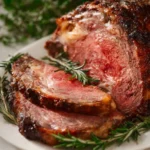
Prime Rib Roast Recipe
- Total Time: 15 hours
- Yield: 1 pound per person 1x
Description
The perfect family prime rib roast recipe with garlic, rosemary, and thyme—ideal for holidays or Sunday dinners.
Ingredients
1 bone-in prime rib roast
1/3 medium onion per pound
1 tsp kosher salt per pound
1/2 tsp black pepper per pound
1 tsp minced garlic per pound
1 tsp fresh rosemary per pound
1 tsp fresh thyme per pound
1/2 tsp olive oil per pound
Instructions
1. Rinse and dry the roast, leaving the fat layer intact.
2. Place onions on rack and position roast on top.
3. Rub roast with garlic, herbs, salt, and olive oil.
4. Cover and marinate 8 hours or overnight.
5. Remove from fridge 2 hours before cooking.
6. Roast at 450°F for 30–40 minutes until browned.
7. Add 1/2 cup water to pan; rotate roast halfway.
8. Reduce oven to 350°F and cook 90–120 minutes.
9. Rest for 20 minutes before slicing.
10. Strain pan juices and serve as au jus.
Notes
If roast is under 6 lbs, reduce initial high-heat time.
Always check internal temp for perfect doneness.
For boneless roasts, check 20 minutes earlier.
- Prep Time: 12 hours
- Cook Time: 3 hours
- Category: Main Course
- Method: Roasting
- Cuisine: American
Nutrition
- Serving Size: 1 lb
- Calories: 709
- Sugar: 2g
- Sodium: 2430mg
- Fat: 62g
- Saturated Fat: 26g
- Unsaturated Fat: 30g
- Trans Fat: 1g
- Carbohydrates: 7g
- Fiber: 1g
- Protein: 32g
- Cholesterol: 137mg
Creating a Flavorful Marinade
For a standout prime rib recipe, flavor layering begins long before the oven preheats. Mix kosher salt, cracked black pepper, minced garlic, fresh rosemary, thyme, and olive oil into a fragrant paste. Coat the roast generously, massaging it into every crevice. This rub works overnight magic, drawing flavor deep into the fat layer. Place the roast on a rack (or directly on sliced onions) in a roasting pan, cover with plastic wrap, and marinate for at least 8 hours. The result? A roast that’s aromatic even before it hits the oven.
The Art of Marination and Oven Readiness
Why Overnight Marination Matters
Great flavor isn’t rushed. When you marinate the prime rib roast overnight, the herbs and salt infuse the fatty layer and surface meat. Even though the center won’t fully absorb it, that top layer of fat bastes the meat as it cooks, creating a natural self-basting system. This step transforms your dish from “good” to “unforgettable.”
Bringing the Roast to Temperature
Before roasting, remove the beef from the refrigerator two hours early. This crucial step ensures even cooking—putting a cold roast straight into the oven can lead to uneven results. Preheat to 450°F (230°C) and position your oven rack low to prevent premature charring. Add sliced onions beneath the roast for flavor and caramelization. They’ll later form the base of a rich au jus.
Cooking Prime Rib Like a Pro
The Dual-Temperature Method
Professional chefs swear by the two-phase method for cooking prime rib. Start hot to build a crust, then slow-roast to perfection. Roast at 450°F (230°C) for 30–40 minutes until browned. Add ½ cup of water to the pan to prevent drippings from burning. Rotate the roast halfway through. Once browned, reduce the oven to 350°F (175°C) for 90–120 minutes.
A quick reference:
| Weight (lbs) | Roast Time @ 350°F | Approx. Total Time |
|---|---|---|
| 6 lbs | 50 mins | 90 mins |
| 8 lbs | 80 mins | 120 mins |
| 10–12 lbs | 120 mins | 180 mins |

Checking for Doneness
The key to a perfect prime rib roast is temperature accuracy. Insert a meat thermometer into the thickest part:
-
Rare: 120°F / 49°C
-
Medium Rare: 125°F / 51°C
-
Medium: 135°F / 57°C
Remove the roast 5–7°F below your target temperature—it continues cooking while resting. For rare or medium-rare lovers, this technique ensures tenderness and a rosy interior every time.
Resting, Slicing, and Serving
Why Resting Is Non-Negotiable
Once done, transfer the prime rib roast to a cutting board and loosely tent it with foil for 20 minutes. This pause lets juices redistribute throughout the meat instead of spilling out when sliced. Skipping this step can make even the best rib roast recipe disappointingly dry.
Serving and Au Jus
While the roast rests, strain pan drippings and separate the fat. Warm the juices with a splash of water for a simple, flavorful au jus. Slice the roast against the grain into thick, juicy portions. Each slice offers a gradient of doneness—from well-seared ends to a tender pink center. Serve with the warm au jus and roasted onions. Pair with mashed potatoes or Yorkshire pudding for a complete easy Christmas dinner centerpiece.
Expert Tips and Common Mistakes to Avoid
Mistakes to Skip
-
Cooking Cold Meat – Always temper before roasting.
-
Skipping the Thermometer – Guesswork ruins doneness.
-
Not Allowing Rest Time – You’ll lose all those precious juices.
-
Overcrowding the Oven – Leave room for even air circulation.
-
Using Too Much Water – Roasting, not steaming, creates that coveted crust.
Pro Tips for a Flawless Result
-
For boneless roasts, check temperature 20 minutes earlier—they cook faster.
-
Rotate your roast midway through both cooking phases for even browning.
-
For deeper flavor, add a splash of red wine to your pan drippings before serving.
-
Use coarse sea salt—it helps create the signature crust of a perfect prime rib.
Frequently Asked Questions
How much prime rib should I serve per person?
Plan about 1 pound of uncooked prime rib per person.
Can I make this recipe with a boneless roast?
Yes, but check doneness earlier—boneless cuts cook faster.
What’s the best way to reheat leftover prime rib?
Wrap slices in foil with a bit of beef broth and reheat gently at 300°F until warm.
Can I prepare this a day ahead?
Yes. Marinate overnight and roast just before serving for best results.
Why is my roast too salty or dry?
Use the correct salt ratio (1 tsp per pound) and never skip resting before slicing.
Conclusion
This prime rib roast recipe isn’t just about cooking beef—it’s about creating memories. It’s the aroma that fills your home before guests arrive, the first slice revealing perfect marbling, and the satisfaction of hearing the words, “This is the best prime rib I’ve ever had.” Whether you’re hosting your first easy Christmas dinner or refining your family tradition, this method guarantees a centerpiece that commands attention and applause every single time.
Discover more delicious recipes by following me on Facebook and Pinterest.