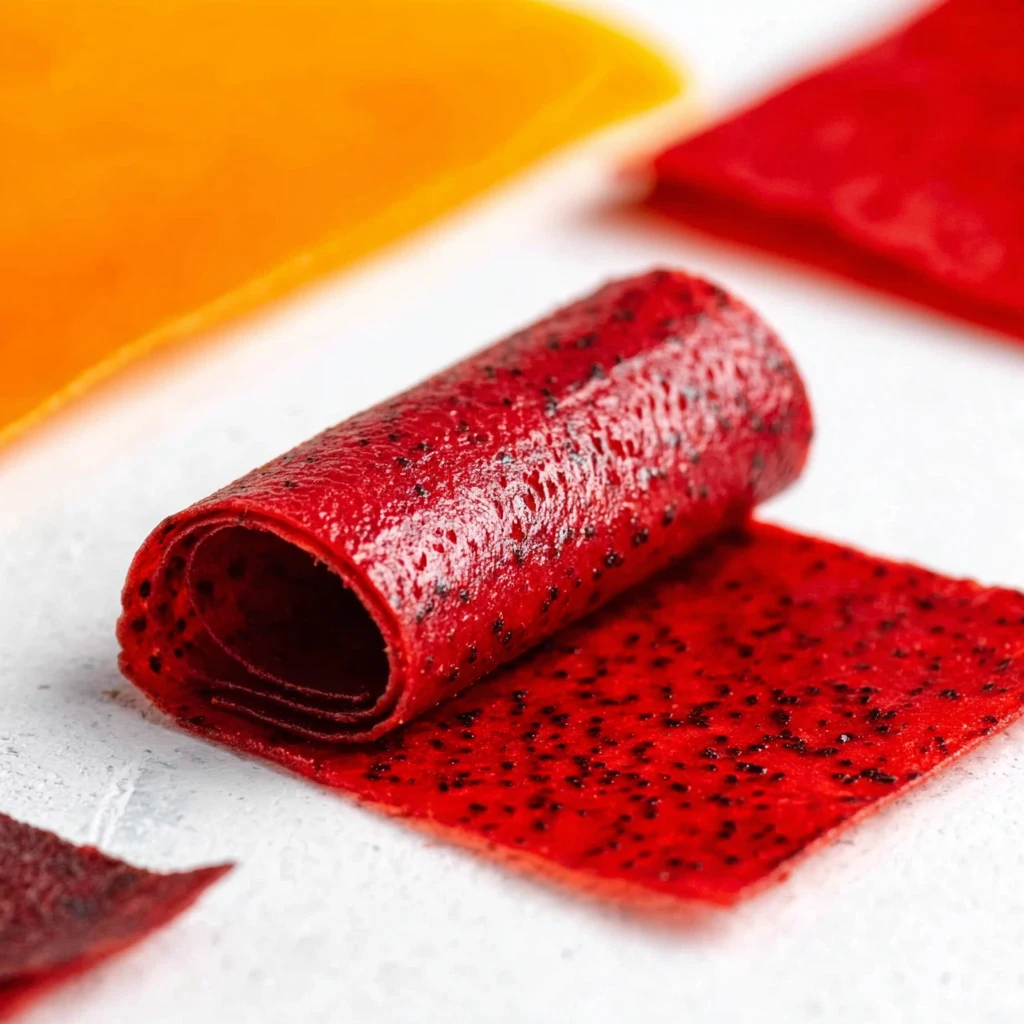
Fruit Leather is one of the easiest ways to turn fresh fruit into a naturally sweet snack you can grab anytime. This simple homemade version delivers the chewy texture of classic fruit roll-ups while using only real fruit and lemon juice. If you’ve been looking for Homemade fruit roll-ups that skip artificial ingredients, this recipe checks every box. It’s naturally no added sugar, family-friendly, and perfect when you want a healthy snack made from fresh ingredients. Even better, it’s a true 2-ingredient recipe that comes together with almost no effort.
Story
I started making Fruit Leather when I wanted a portable fruit snack without the long ingredient list found in packaged options. After testing different fruits and drying times, I realized the simplest version worked best. Fresh fruit blended until silky smooth and finished with a touch of lemon creates flexible, flavorful strips every time. Fruit Leather also became one of my favorite make-ahead snacks because it stores well and travels easily. Whether I use berries in summer or mangoes throughout the year, this recipe always turns fresh produce into something fun and practical.
Ingredients
- 1 lb fresh fruit of your choice (strawberries, blueberries, mangoes, peaches, raspberries, or similar)
- 1 teaspoon lemon juice
Step-by-Step Instructions
Preparing the Ingredients
Preheat your oven to 170°F or the lowest setting available. Line a baking sheet with parchment paper or a silicone baking mat. Wash and prepare the fruit as needed, then add it to a high-speed blender and blend until completely smooth. Add the lemon juice and blend again until fully combined with no visible fruit pieces remaining.
Cooking Instructions
Pour the fruit puree onto the prepared baking sheet and spread it into an even, thin layer, keeping the thickness consistent across the pan. Place in the oven and dry for 3 to 4 hours until the center feels dry and no longer sticky. Remove and cool completely. Transfer the parchment to a cutting board, slice into five strips lengthwise and then crosswise to create 10 pieces. Roll each strip with parchment if desired to make classic fruit roll-ups.
Tips for Perfect Results
Common Mistakes to Avoid
The most common issue comes from spreading the puree unevenly, which causes some areas to dry faster than others. Avoid thick spots near the edges and do not rush the drying process with higher heat because the texture changes quickly. Fruit with high water content may need extra drying time, so begin checking at the three-hour mark and continue until the center feels dry.
Pro Tips for Better Flavor
Choose ripe fruit for the sweetest flavor since this recipe contains no added sweeteners. Blend thoroughly for a smooth texture and combine fruits to create custom flavors. Strawberries and mangoes work especially well together, while blueberries create a richer taste and deeper color. If your fruit tastes slightly flat, a small extra splash of lemon juice brightens the flavor.
Serving and Storage
How to Serve
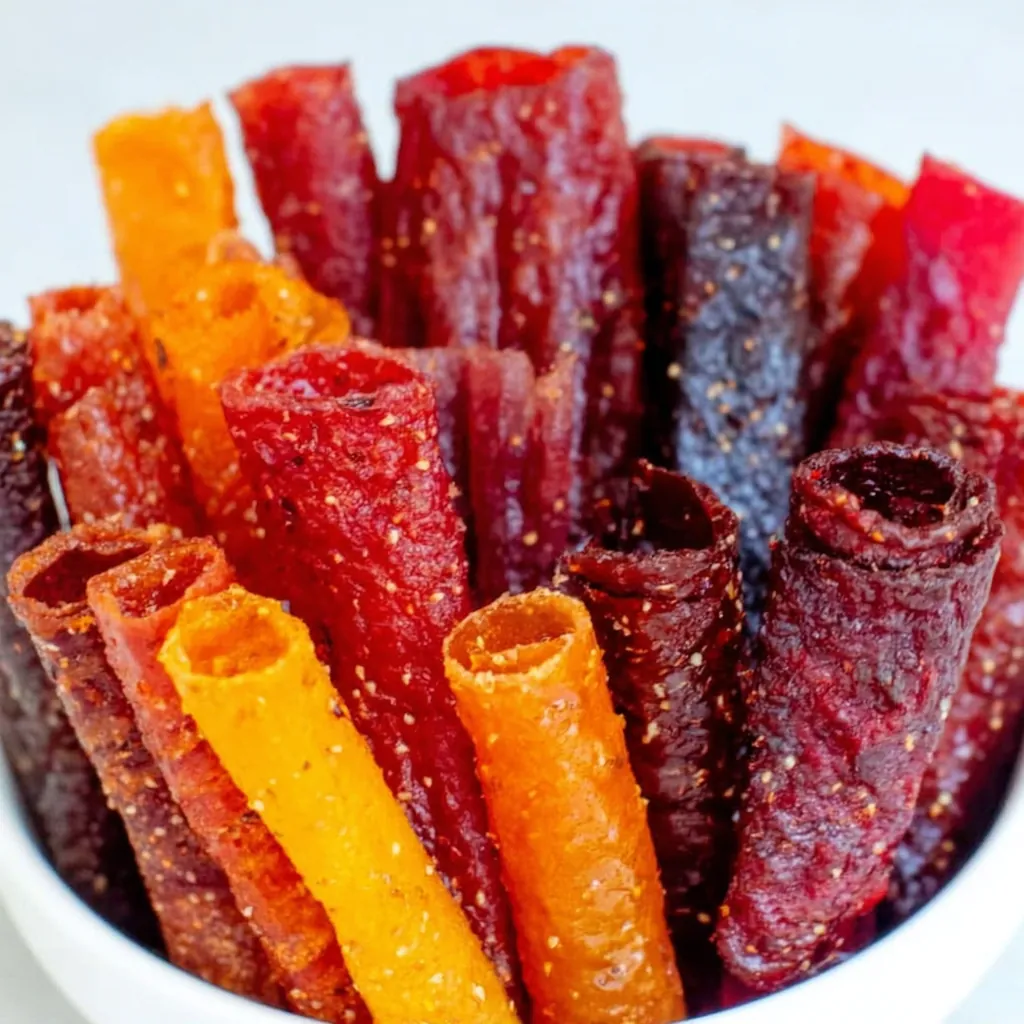
Serve Fruit Leather as a quick afternoon snack, pack it into lunchboxes, bring it on road trips, or pair it with nuts and yogurt for a balanced snack plate. These homemade fruit roll ups also work well as a naturally sweet treat after meals.
How to Store Leftovers
Store the finished fruit leather in an airtight container in the refrigerator for up to one week. You can keep individual rolls wrapped in parchment paper to reduce sticking. They also stay fine for day trips or packed lunches without refrigeration for several hours.
Conclusion
Fruit Leather proves that homemade snacks can stay simple and satisfying. With fresh fruit and a little patience in the oven, you can create chewy fruit roll ups without added sugar or unnecessary ingredients. Keep your favorite fruits on hand and make a batch whenever you want an easy snack option.
Discover more delicious recipes by following me on Facebook and Pinterest.
Frequently Asked Questions
What fruits work best for fruit leather?
Strawberries, mangoes, blueberries, raspberries, peaches, and mixed berry combinations all work very well. Softer fruits generally blend more smoothly and dry more evenly.
Can I make fruit leather without lemon juice?
Yes, but lemon juice brightens flavor and helps maintain color. If omitted, the final taste may feel slightly less fresh depending on the fruit.
Why is my fruit leather sticky after drying?
Sticky fruit leather usually needs more drying time. Continue dehydrating in short intervals until the center feels dry and flexible rather than wet.
Print
Fruit Leather
- Total Time: 3 hours 5 minutes
- Yield: 10 fruit roll ups 1x
- Diet: Vegetarian
Description
Easy homemade fruit leather made with fresh fruit and lemon juice for a naturally sweet snack without added sugar.
Ingredients
- 1 lb fresh fruit of choice
- 1 tsp lemon juice
Instructions
- Preheat oven to 170°F and line a baking sheet.
- Blend fruit until smooth.
- Add lemon juice and blend again.
- Spread puree evenly on baking sheet.
- Dry for 3 to 4 hours until not sticky.
- Cool completely.
- Slice into 10 pieces.
- Roll strips if desired.
Notes
- Use ripe fruit for best sweetness.
- Dry longer if center remains sticky.
- Store refrigerated up to 1 week.
- Prep Time: 5 minutes
- Cook Time: 3 hours
- Category: Snack
- Method: Baked
- Cuisine: American
Nutrition
- Serving Size: 1
- Calories: 35
- Sugar: 6
- Sodium: 1
- Fat: 0
- Saturated Fat: 0
- Unsaturated Fat: 0
- Trans Fat: 0
- Carbohydrates: 9
- Fiber: 1
- Protein: 0
- Cholesterol: 0